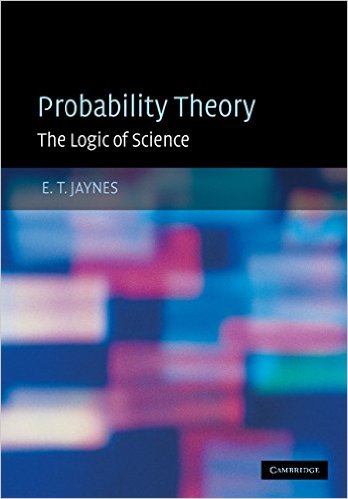
Probability Theory: The Logic of Science
Covers probability theory and all of its conventional mathematics in a wider context than that of the standard textbooks.
Tag(s): Probability Statistics
Publication date: 09 Jun 2003
ISBN-10: 0521592712
ISBN-13: 9780521592710
Paperback: 95 pages
Views: 32,084
Probability Theory: The Logic of Science
Covers probability theory and all of its conventional mathematics in a wider context than that of the standard textbooks.
Publication date: 09 Jun 2003
ISBN-10: 0521592712
ISBN-13: 9780521592710
Paperback: 95 pages
Views: 32,084
Document Type: Textbook
Publisher: Cambridge University Press
License: n/a
Post time: 14 Apr 2007 01:38:13
G. Larry Bretthorst wrote:Going beyond the conventional mathematics of probability theory, this study views the subject in a wider context. It discusses new results, along with applications of probability theory to a variety of problems. The book contains many exercises and is suitable for use as a textbook on graduate-level courses involving data analysis. Aimed at readers already familiar with applied mathematics at an advanced undergraduate level or higher, it is of interest to scientists concerned with inference from incomplete information.
Tweet
About The Editor(s)

Dr. G. Larry Bretthorst is a recognized expert in Bayesian Probability Theory. His current position is Associate Professor of Radiology at the Washington University School of Medicine, Biomedical Magnetic Resonance Laboratory.
Dr. G. Larry Bretthorst is a recognized expert in Bayesian Probability Theory. His current position is Associate Professor of Radiology at the Washington University School of Medicine, Biomedical Magnetic Resonance Laboratory.
About The Author(s)
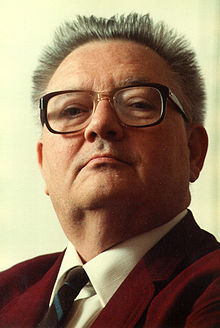
Edwin Thompson Jaynes (July 5, 1922 – April 30, 1998) was the Wayman Crow Distinguished Professor of Physics at Washington University in St. Louis. He wrote extensively on statistical mechanics and on foundations of probability and statistical inference.
Edwin Thompson Jaynes (July 5, 1922 – April 30, 1998) was the Wayman Crow Distinguished Professor of Physics at Washington University in St. Louis. He wrote extensively on statistical mechanics and on foundations of probability and statistical inference.